
I don’t know about you but it drives me crazy to see basic copywriting and grammar mistakes in writing. With email, social media and text messaging added to traditional forms of business communication, we’re sending more written messages than ever before – and making more mistakes, as well.
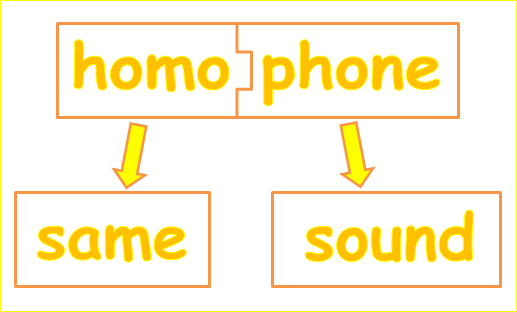
Perhaps not surprisingly, mistakes in business writing often appear when someone uses a word that has more than one spelling and/or meaning. In other words, someone uses a word that sounds exactly the same as another. These words are known as homophones.
In verbal communication, there’s no confusion because the pronunciation is the same. But in writing, there’s a difference. Plus, your spell-checker won’t catch the mistake because you’ve spelled the word correctly, just used the wrong word to begin with. The last thing you want is to send a formal message to a prospective client – or worse yet, to your entire email list – that uses the wrong one.
Here are three common homophone pairs that often result in business writing mistakes (be sure to check out last year’s post on common copywriting mistakes, too):
1. There, their and they’re
These three homophones are easily confused in writing. However, each means something quite different, so it’s important to understand which is which and use the correct one.
There is used to refer to a place, such as, “Please put it over there,” or “How long will it take to get there?” It’s also used with “to be” verbs, such as, “There are a lot of things to discuss in today’s meeting,” or “There isn’t much time to talk about each one.”
Their is an adjective and indicates possession of something. For instance, “Their company makes pet food,” or “I received their message, but I can’t make it to the meeting.”
They’re is a contraction of the words “they” and “are”. Use it when you want to indicate that “they” are doing something, such as, “They’re coming to meet us at 4:00 today,” or, “I don’t think they’re going to be able to make it.”Here’s an example of all three used in one sentence: “They’re going to go over there and pick up their documents.”
2. Compliment vs. complement
These two words differ only by one letter, but their meanings are quite different. Compliment, spelled with an “i”, is used to describe praise or admiration: “He complimented her on the report she gave her team,” or “My remarks were meant to be complimentary, but he took them the wrong way.”
Complement, spelled with an “e”, refers to things that go together or enhance one another. For example, “The diagrams he created complemented the written report perfectly,” or, “This wine was the perfect complement to our dinner.”
3. Principal vs. principle
The word principal can be either a noun or an adjective, and it can have one of several meanings. First, it can refer to something or someone who holds a top position or rank, such as a school principal. As an adjective, it can be used to describe something of top importance, such as, “This is the principal message we’re sending our customers.” Also, in finance, “principal” is used as a noun and refers to capital or property before interest is added or accrued.
Principle, on the other hand, can only be used as a noun, and refers to a law or rule. For instance, “One of our company’s founding principles is that all customers and employees should be treated with respect.”
Need more than just a few tips?
If you need more help with your business communication or content writing, contact Breathe Marketing today.
